
Gamesight data shows that rather than running into viewer fatigue, franchise sequels can attract significantly larger audiences for streamers
Bradley Webb is a data analyst at Gamesight, where he analyses creator viewership, influencer marketing performance, and broader creator trends for publishers and marketing teams. Gamesight’s clients include 2K, Sony Interactive Entertainment, Xbox, Warner Bros, Riot Games, and Square Enix.
For years, sequel launches have carried a built-in anxiety for marketers. The assumption is that audiences tire of franchises, creators lose excitement, and performance decays over time. But an analysis by Gamesight shows that this narrative doesn’t generally hold true. For content creators, sequel actually outperform their predecessors relative to baseline content in the majority of cases.
The data used in this study was gathered from internal Gamesight Twitch data, and the analysis is designed to isolate one very specific question: when a creator streams a sequel, does their audience show up more or less than they did for the original?
We concentrated on Twitch, analysing viewer figures for the time period between the launch of the original game in a franchise through to the first 30 days after the launch of its sequel. The focus was on live audience behaviour, not video-on-demand or social carryover.
Only creators who streamed both the original game and its sequel were included. These creators were labelled as ‘dual streamers’ and required a minimum ACV (average concurrent viewer) threshold of 10 for both titles. (See ‘Definitions and metrics’ for more information.)
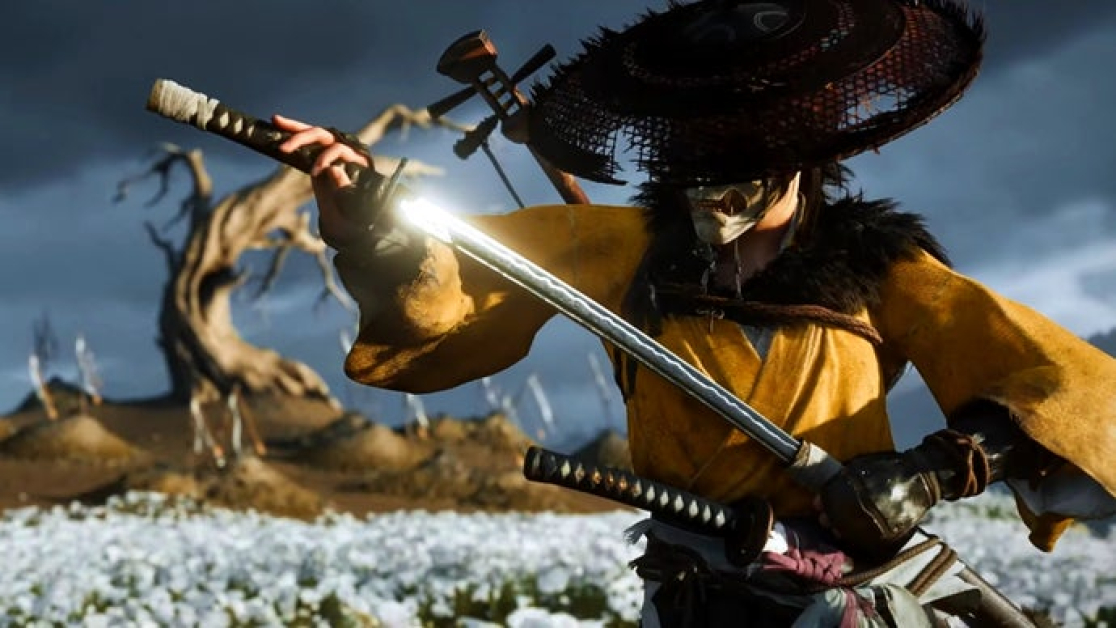
The total sample size was 8,079 dual streamers, and the five franchises analysed were Ghost of Tsushima, Borderlands, Hollow Knight, Kingdom Come: Deliverance, and Death Stranding.
Results: Audiences follow creators into sequels
Across all five franchises and more than 8,000 creators, sequels outperformed original titles by +6.3 percentage points relative to each creator’s baseline content.
This means that when creators switched from streaming an original title to its sequel, their live audiences showed up at meaningfully higher rates compared to how those same creators typically perform. This pattern held across four of the five franchises analysed. In those four franchises, the majority of creators saw viewership growth when streaming the sequel.
If sequel fatigue was the dominant force, we would expect declining performance as creators move from originals into sequels. What we observed is the opposite. Franchise continuation, when paired with meaningful gameplay evolution, drives stronger audience engagement.
1 of 5
Caption
Attribution
Borderlands demonstrated the most dramatic turnaround, improving by 25 percentage points from -14% below baseline in Borderlands 3 to +11% above baseline for Borderlands 4. Ghost of Tsushima showed strong carryover growth with +17% growth, while Kingdom Come and Hollow Knight both saw little to moderate growth. Death Stranding was the only franchise to decline, dropping 11 percentage points in its ACV change. Additionally, four out of five franchises saw a majority of their creators grow in viewership while playing a game’s sequel.
Creator size performance (all franchises combined)
The critical finding is that all creator tiers improved for sequels, regardless of size, contradicting assumptions about sequel fatigue or limited appeal among smaller streamers.
When examining creator performance by audience size using baseline ACV, a consistent pattern emerged across all tiers. Large creators (1,000-10,000 ACV) showed the biggest improvement at +8.2 percentage points, followed closely by mid-sized creators (100-1,000 ACV) at +7.8 points. Mega creators (10,000+ ACV) demonstrated moderate improvement of +5.4 points, while even micro creators (under 100 ACV) still gained +2.7 points.
Case study: Borderlands 3 and Borderlands 4
Borderlands 3 averaged -14.6% below baseline with only 28.6% of creators exceeding their typical viewership. Borderlands 4 reversed this entirely. The sequel averaged +11.7% above baseline, a 26.3 percentage point swing from its predecessor. Nearly half of creators (44.2%) now exceeded their baseline performance, up from less than one-third.
The histogram shows the entire performance distribution shifted right – meaning that creators of all sizes saw improvements.
The takeaway is that sequels aren’t bound by franchise history. A sequel can help to reset creator audience engagement, and prior streaming underperformance shouldn’t dictate sequel creator strategies.
Definitions and metrics
Average concurrent viewers (ACV). Formula: Total viewer seconds divided by total stream duration seconds. This measures true live demand during streams.
Relative performance vs baseline. Formula: (Game ACV – Other Content ACV) / Other Content ACV × 100. “Other Content” refers to each creator’s non-franchise streams during the same time window. Example: A value of +15% means the creator averaged 15% more viewers on the franchise game than on their typical content.
Improvement calculation. Measured in percentage points, not percentages. Formula: Sequel vs Other % minus Original vs Other %. Example: Original at +10%, Sequel at +25% equals a +15pp improvement.
Creator segmentation. Creators were grouped by baseline ACV during the first 30 days of the sequel: Micro, less than 100 ACV; Mid, 100 to 1,000 ACV; Large, 1,000 to 10,000 ACV; Mega, 10,000+ ACV.